

Introduction: Why Industrial Automation?
If you’ve ever dealt with Industrial Automation issues on the plant floor, you know how frustrating they can be. But here’s the thing: there’s a growing demand for Industrial Automation, and it’s not hard to see why. Factories and plants are under pressure to boost efficiency, enhance safety, and cut costs. That’s a trifecta of benefits that’s hard to ignore.
You might be wondering why all the buzz around automation. Well, automation systems can streamline processes, leading to a smoother operation with fewer downtimes. I remember when I first joined the field about 15 years ago; I was amazed at how a simple PLC could transform a sluggish production line into a high-speed marvel. The precision and reliability made it clear to me that Industrial Automation wasn’t just the future—it was the present.
Moreover, automation significantly enhances safety by reducing human intervention in hazardous environments. And let’s not forget the cost savings. By optimizing resource use and minimizing waste, companies can save a significant chunk of change.
Understanding the Basics of Industrial Automation
Key Components of an Automation System
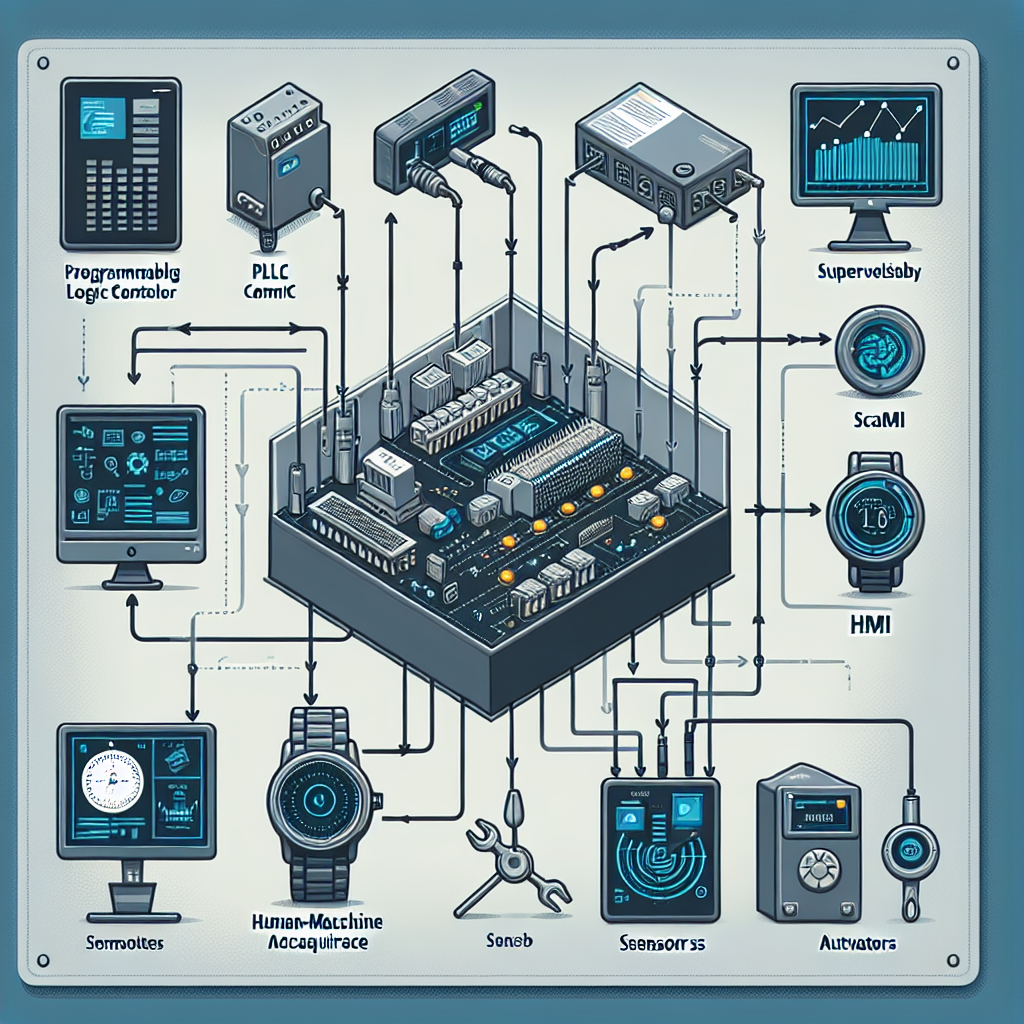
So, you’re ready to dive into Industrial Automation. But where do you start? First off, you need to understand the key components: PLCs, SCADA, HMIs, and VFDs. These form the backbone of most automation systems. A Programmable Logic Controller (PLC), like the Siemens S7-1200, is your primary control device, executing real-time control over your process. It’s the workhorse that handles tasks from simple relay logic to complex process control.
Supervisory Control and Data Acquisition (SCADA) systems provide a high-level overview of the plant’s operations. They’re your eyes and ears, collecting data from various points in your system and helping you make informed decisions. Then there’s the Human-Machine Interface (HMI), the bridge between the operator and the control system. It offers a user-friendly way to interact with the automation system, often through touchscreens. I once had a project where the HMI on a Mitsubishi GOT2000 series was the difference between operators understanding faults immediately or scratching their heads for hours.
Common Automation Technologies
Now, don’t overlook the role of sensors and actuators. These are the hands and feet of any automation system. Sensors gather data about the environment—like temperature, pressure, or position—and send it to the PLC. Actuators, on the other hand, perform actions based on the PLC’s instructions, like opening a valve or starting a motor.
Communication protocols are another crucial element. Modbus and Profinet, for example, allow different components to talk to each other. Modbus is simple and widely used, while Profinet provides high-speed, real-time data exchange. Understanding these will save you a headache when you’re trying to troubleshoot network issues at 2 AM, trust me.
Pro Tip: Always keep a spare Ethernet cable and a USB-RS485 converter in your toolbox. They’re lifesavers during unexpected network troubleshooting.
Essential Skills and Knowledge
Technical Skills You Need
You’ll quickly realize that technical skills are vital in the Industrial Automation world. Programming knowledge is paramount. Whether it’s Ladder Logic for traditional relay replacements or Structured Text for more complex algorithms, understanding these languages is crucial. It’s not just about writing code; it’s about writing efficient, reliable code that a PLC can execute without a hitch. I remember a time when an undocumented piece of Ladder Logic on a legacy Allen Bradley PLC saved a client day when a custom machine went haywire.
Networking skills are another must-have. Configuring and troubleshooting networks are everyday tasks. You need to be comfortable with Ethernet, fieldbuses, and the myriad of protocols that keep your systems humming along.
Soft Skills for Success
However, technical prowess alone won’t cut it. Soft skills play a significant role too. Critical thinking and problem-solving are your best friends when you’re knee-deep in a production issue that’s causing unnecessary downtime. I’ve spent countless nights working under pressure to resolve issues that were costing the company thousands per hour. It’s these situations that test your mettle.
Moreover, communication skills are essential. You’ll often find yourself explaining complex systems to non-engineers, and the ability to break down technical jargon into layman’s terms is invaluable. Honestly, I think this is what separates a good engineer from a great one.
Gaining Practical Experience
Starting with Simulations
So, how do you gain experience in Industrial Automation? Start with simulations. They’re a fantastic way to learn without the risk of causing expensive damage. Tools like Siemens TIA Portal and RSLogix 5000 offer robust simulation environments where you can practice your programming skills. I’ve spent countless hours simulating different scenarios to hone my skills and test out new ideas.
Hands-on Practice in Real Environments
However, nothing beats the real thing. Internships or apprenticeships are invaluable. They provide you with hands-on experience and expose you to real-world challenges. You learn things in the field that no book or simulator can teach you. For instance, how to deal with a malfunctioning VFD panel or a SCADA system that’s gone berserk.
Furthermore, consider building your own small-scale automation system. It’s a great way to apply what you’ve learned and see the results firsthand. Plus, it’s a nice addition to your portfolio. I once built a mini conveyor system in my garage, complete with sensors, a PLC, and an HMI. It was a game-changer for my understanding of how everything integrates. The satisfaction of watching it work flawlessly the first time was unparalleled.
Explore more topics on Industrial Automation at Industrial Gyan
For more technical insights, check out an authoritative source like Siemens Automation.
Certifications and Training Programs
Popular Certification Options
Certifications can be your ticket into industrial automation, especially if you’re looking to boost your credentials quickly. Siemens offers certification for its TIA Portal, which covers S7-1200/1500 PLCs. Rockwell Automation has its own Certified Automation Professional (CAP) and ControlLogix certifications. Then there’s ISA, well-respected for its Certified Control Systems Technician (CCST) program. I remember when I first got my Siemens certification—having that on your resume can make a significant difference.
Choosing the Right Training Program
Now, whether you should go for online or in-person training depends on your learning style. Online courses offer flexibility, but you’ll miss the hands-on experience that in-person training provides. In my experience, nothing beats tinkering with a live PLC. However, if you’re balancing a job and learning, online might be the only feasible option. When you evaluate a course, look at the instructors. Are they industry veterans? Review the course content too. Programs covering specific topics like Profinet networking or VFD configuration usually mean the instructor knows their stuff. Trust me, a well-structured course can save you loads of time and headache.
Networking and Community Involvement
Joining Professional Organizations
Joining groups like ISA or IEEE offers several advantages. Networking, access to exclusive resources, and the chance to attend specialized events are just a few perks. These organizations can open doors and introduce you to people who’ve been in the industry longer than I’ve been debugging Modbus issues at 2 AM.
Participating in Forums and Online Groups
Online groups and forums are gold mines for knowledge and support. You can engage in discussions, ask questions, and share your projects. I personally find LinkedIn groups focused on industrial automation to be very informative. Moreover, attending industry conferences and seminars is a great way to see the latest tech and meet the big players. It’s not just about learning; it’s about being part of a community that shares your passions.
Common Challenges and How to Overcome Them
Industrial automation is a field that’s always changing, and keeping up is no small feat. New technologies and protocols appear every other month. The trick is continuous learning. Whether it’s through webinars, publications, or community discussions, staying updated is key.
Balancing theoretical knowledge with practical application can be tricky. I recommend spending as much time as you can with hands-on practice. Additionally, adapting to new standards and regulations can be challenging. You’ll need to keep an eye on changes from organizations like ISA or IEC and adjust your practices accordingly. I once found myself in a bind when a new safety standard was introduced just weeks before a system’s scheduled upgrade. It took some late nights, but we adapted in time.
Common Mistakes to Avoid
Even seasoned engineers can fall into traps. Here are some common mistakes to steer clear of:
- Overlooking Documentation: Always document your work. I once had to reverse-engineer a system because the previous engineer left zero notes. It wasn’t fun.
- Ignoring Safety Standards: Never cut corners on safety. It might save time initially, but it’s not worth the risk.
- Underestimating Testing: Skipping thorough testing can lead to catastrophic failures. Trust me, running a test cycle can save you from embarrassing and costly errors.
- Not Keeping Up with Updates: Always update your software and firmware. An outdated system can be a security risk and lead to inefficiencies.
- Neglecting to Back Up Configurations: Always keep backups of your PLC and SCADA configurations. You’ll thank yourself when a system goes down and you need a quick restore.
Frequently Asked Questions
What is the best way to start learning industrial automation?
The best way to start is by getting hands-on experience with basic PLC programming and SCADA systems. Enroll in a practical course that includes both theory and labs. Investing in an entry-level PLC kit to practice at home can also be beneficial.
How long does it take to become proficient?
The timeline varies, but typically you’ll start feeling comfortable after 6-12 months of dedicated learning and practice. Proficiency, where you can handle real-world scenarios, might take a couple of years. Keep in mind, learning never really stops in this field.
What are the most common tools and software used?
You’ll frequently use software like Siemens TIA Portal, Rockwell Studio 5000, and HMI/SCADA platforms like Wonderware or Ignition. Tools like multimeters, oscilloscopes, and field communicators are also essential. Knowing network analyzers for troubleshooting Profinet or Modbus networks can be invaluable.
How can I find job opportunities in this field?
Networking is key—attend industry events, join relevant LinkedIn groups, and keep your resume updated on job portals. Specialized job boards focused on industrial automation can also be a great resource. Don’t underestimate the power of word-of-mouth referrals within the community.
What industries employ industrial automation professionals?
You’ll find opportunities in various sectors such as manufacturing, oil and gas, automotive, pharmaceuticals, and food and beverage. Each industry has specific needs and challenges, but the core principles of automation apply across the board.
Can I transition into industrial automation from another engineering field?
Absolutely! Many skills are transferable. If you have a background in electrical, mechanical, or even software engineering, you’ll find your skills useful in industrial automation. Additional training or certifications can ease the transition.
Is it necessary to have a degree in automation to succeed in this field?
Not necessarily. While a degree can be beneficial, practical skills and experience often carry more weight. Certifications and continuous learning are key. Many successful engineers in this field have diverse educational backgrounds.
Key Takeaways
Getting into industrial automation involves a mix of education, hands-on experience, and networking. Start with learning the basics, then focus on gaining practical experience. Certifications can add value to your resume, but they should complement real-world skills. Furthermore, never stop learning, as technology continuously evolves.
Building a professional network is just as important. It opens doors to opportunities and connects you with resources and mentors. Remember, industrial automation isn’t just about machines—it’s about working with people who share your enthusiasm. So get involved, keep learning, and enjoy the journey.
Honestly, I think if you’re passionate about industrial automation, you’ll find your place. It’s a rewarding career with endless opportunities to innovate and improve. And trust me, once you start, you won’t want to stop. Got questions or need advice? Let’s chat in the comments or over at industrialgyan.com. You’ve got this!

I am an electrical & automation engineer with extensive experience in Design, PLC programming, SCADA development, and IoT integration. I have a strong background in the industry, focusing on the Design & Development of Hardware, Software &Industry 4.0 technologies, and the integration of intelligent manufacturing systems.
I have a deep understanding of electrical principles and am proficient in various programming languages, including Ladder Logic, Structured Text, and Python. In addition, I have experience with various PLC, SCADA & IoT technologies and a track record of successful integration projects for various clients.