
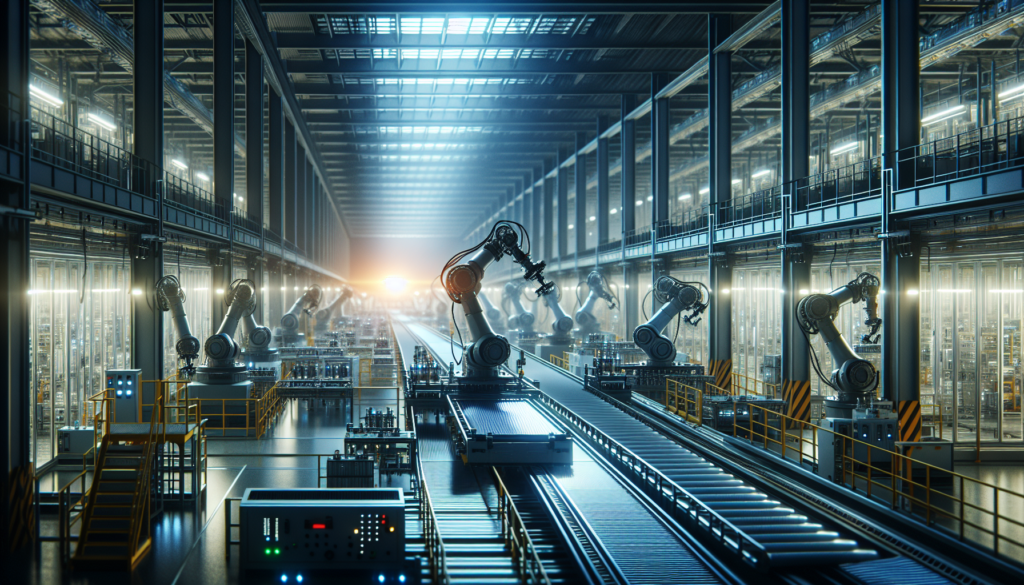
Introduction: Why Industrial Automation Matters
If you’ve ever walked through a plant that runs like a well-oiled machine, you know Industrial Automation is the unsung hero behind the scenes. It’s what keeps the conveyors moving, ensures the robots don’t miss a beat, and basically turns chaos into a symphony of productivity. I remember visiting a plant a few years ago. Before automation, they were struggling with downtime and inconsistent quality. Fast forward a year, they had embraced automation tech, and the transformation was nothing short of a revelation. Productivity shot up, defects plummeted, and they could finally breathe a bit.
However, many folks still think automation means robots taking over every job, leaving humans out in the cold. That’s a common misconception. The truth is, Industrial Automation enhances what we do, making processes safer and more efficient. It’s not about replacing people; it’s about augmenting human capabilities so we can focus on more complex tasks. So, the next time someone says automation is just a bunch of robots, remind them it’s the backbone of modern manufacturing, doing the dirty work so humans can do the thinking.
Key Components of Industrial Automation
PLCs (Programmable Logic Controllers)
PLCs are pretty much the brain of the whole operation. These rugged computers control machinery, from the simple pump to complex assembly lines. Think of Siemens S7-1200 or Allen Bradley’s CompactLogix series—they’re everywhere. You configure these bad boys to take inputs from sensors, process the data, and then control actuators. In my experience, a well-optimized PLC program can shave cycle times down by as much as 15%. However, programming them can be a bit of a rabbit hole, especially if you’re not familiar with ladder logic or structured text.
Let me tell you about a time when a small mistake in PLC programming caused major havoc. We were setting up a new line, and I had just started with a fresh program. An oversight in conditional checks led to a conveyor operating in reverse! It was a reminder of how minute details in logic can have outsized impacts.
SCADA Systems
Now, let’s talk SCADA—Supervisory Control and Data Acquisition. SCADA is the eyes and ears of your plant. It lets you monitor processes in real-time, gather data, and control your systems remotely. For instance, during a night shift, you can easily troubleshoot a fault without running to the control room. It’s like having a bird’s-eye view of your entire operation. However, setting one up can be tricky—I’ve seen installations where the wrong tag mapping led to serious miscommunication and delays. But when done right, SCADA is invaluable. You get dashboards, alarms, data logging, and more, all at your fingertips.
Funny enough, I once got a call at 2 AM because the SCADA system was giving false alarms. Turns out, a sensor calibration drifted, sending erratic data to the SCADA. A quick recalibration solved it, but it highlighted how crucial sensor accuracy is in these systems.
VFDs (Variable Frequency Drives)
VFDs are the unsung heroes when it comes to energy efficiency. By controlling the speed of motors, they save energy and reduce wear and tear. The ABB ACS550 or Mitsubishi’s FR-D700 series are popular choices. Honestly, I think every plant should have VFDs wherever variable motor speeds can improve efficiency. For instance, I’ve seen them cut energy consumption by 20% in HVAC systems alone. However, VFDs require careful parameter setup—get it wrong, and you could end up with overheating issues or worse.
Here’s the thing: I once had to troubleshoot a VFD that kept tripping. Long story short, someone had accidentally set the torque limit parameter too low. A quick adjustment to the right settings and the production line was back on track.
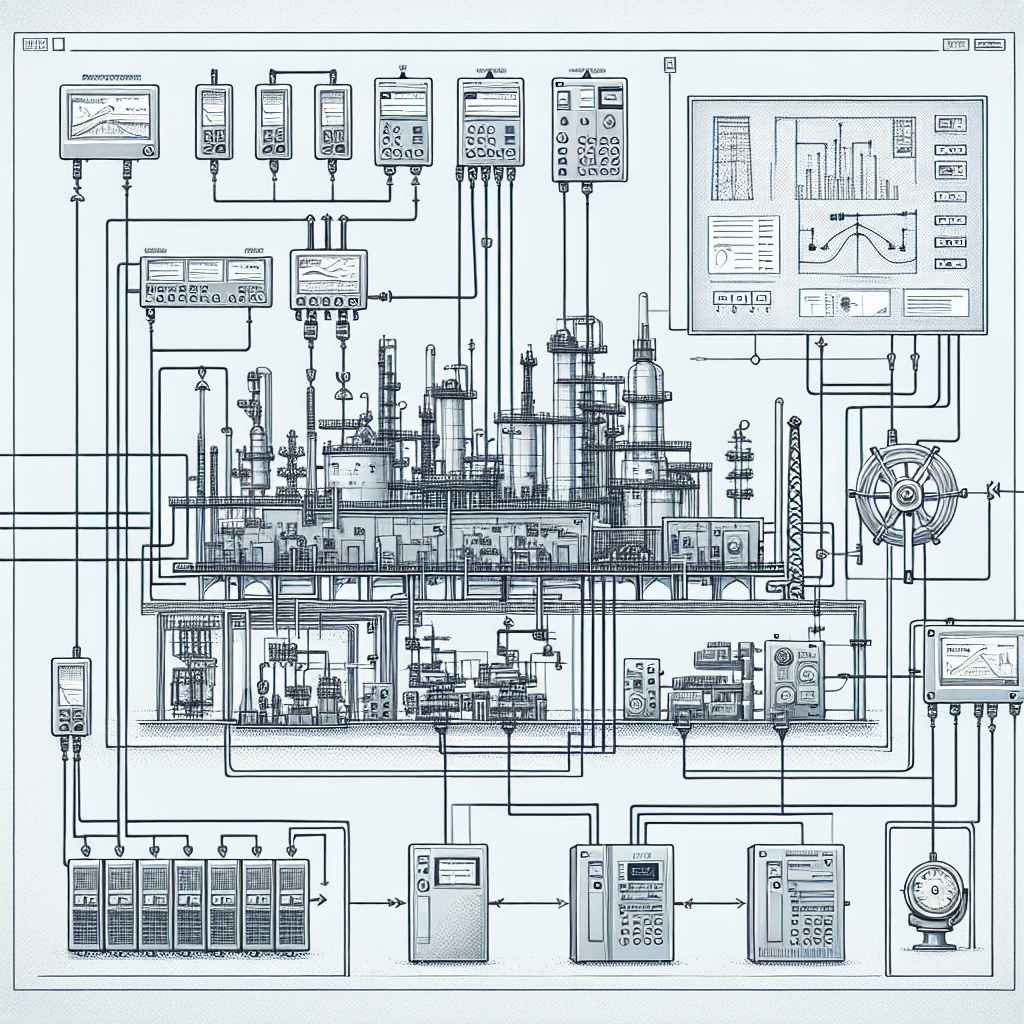
Communication Protocols in Automation
Communication protocols are the glue that holds your automation systems together. They’re how your PLCs talk to SCADA systems, VFDs, and other devices. The main players are Modbus, Profinet, and Ethernet/IP. Each has its strengths and weaknesses.
Modbus
Modbus is the old workhorse—simple, reliable, and easy to implement. You’ll still find it everywhere, especially in legacy systems. However, it’s not the fastest kid on the block. I once spent 3 hours debugging a Modbus timeout that turned out to be a loose RS-485 terminal. So, it’s crucial to ensure secure connections and correct baud rate settings for smooth communication.
Additionally, keep in mind that Modbus communication can face issues with noisy environments. Shielded cables like Belden 9841 help mitigate these issues, ensuring signal integrity.
Profinet
On the other hand, Profinet offers high-speed data exchange and is perfect for real-time applications. Siemens pushes it hard with their hardware. However, it can be a tad complex to configure, especially if you’re mixing brands. I had a case where a misconfigured Profinet device led to network load issues, causing drops in communication.
To avoid such issues, always make sure your devices have the latest firmware updates. Furthermore, using managed switches can help control and monitor network traffic effectively.
Ethernet/IP
Finally, there’s Ethernet/IP—great for interoperability as it uses standard Ethernet. Rockwell Automation loves it. It’s flexible but can get bogged down if not isolated properly. I’ve seen systems grind to a halt because someone plugged a machine directly into the plant’s IT network, causing broadcast storms.
Pro Tip: Always keep separate VLANs for your automation and IT networks to avoid unnecessary traffic and potential crashes.
The Role of Sensors and Actuators
Sensors and actuators are the hands and feet of your automation system. Sensors gather data from the environment—temperature, pressure, flow, you name it. Actuators do the work—turning valves, moving arms, and more. Together, they bring your automated processes to life.
Types of Sensors
There are countless types of sensors, each with specific applications. For instance, thermocouples and RTDs are your go-to for temperature measurement, while ultrasonic sensors are kings of level measurement. You’ll want to choose the right sensor for the job to ensure accuracy and reliability. I once saw a plant use an inappropriate sensor for a high-temperature application, and it failed within weeks, costing them downtime and money.
Another example: A friend of mine had an issue with a pressure sensor that kept giving faulty readings. After some digging, they discovered that the sensor wasn’t rated for the corrosive environment it was placed in, leading to early failure.
Common Actuators
On the actuator side, you’ve got electric motors, hydraulic systems, and pneumatic cylinders. Electric actuators are precise and clean but can be pricey. Pneumatic actuators are cost-effective and fast but don’t offer the same control as electric ones. In my experience, the choice of actuator often boils down to what you’re automating and how much precision you need.
For instance, in applications requiring high precision, such as robotic arm movement, electric actuators are often preferred. Conversely, for tasks like clamping and lifting, where speed is more crucial than precision, pneumatic actuators can be more suited.

Challenges and Best Practices in Industrial Automation
Common Pitfalls
Here’s the thing: industrial automation isn’t all smooth sailing. I once spent three hours debugging a control loop that acted up because someone swapped cables. Miscommunication or misconfigured parameters like P001 in a VFD can lead you astray. Electrical noise on a Profinet network? That’s another headache you’ll want to avoid. Additionally, inadequate documentation often leaves engineers scratching their heads when it comes time for maintenance or upgrades.
I’ve also seen mistakes like overlooking the importance of surge protection. A surge took out several critical controllers in one facility, teaching everyone there the hard way about the importance of transient voltage suppressors.
Best Practices
From my experience, one of the best practices is rigorous documentation. Trust me, it’ll save you countless headaches down the line. Additionally, always run a comprehensive risk assessment before starting any project. This helps in identifying potential problem areas early on. Moreover, when dealing with communication protocols, always verify your cable connections and termination resistors—almost every bizarre network issue I’ve seen ties back to this.
Let’s talk about training. The way I see it, continuous learning isn’t optional. Keep up with the latest PLC programming languages or SCADA software versions like TIA Portal V17. Attending workshops and webinars can also provide insights into new technologies and methodologies.
Furthermore, involving operators in the automation process can be invaluable. They provide insights from the ground level that can prevent design oversights and ensure smoother transitions.
Common Mistakes to Avoid
In my 15 years in industrial automation, I’ve seen some recurring mistakes that can derail even the best projects. Here’s a rundown of what to avoid:
- Ignoring Grounding Issues: Poor grounding causes a bunch of problems, from intermittent faults to damaged equipment. Ensure all devices are properly grounded according to manufacturer specifications.
- Using Incompatible Devices: Just because it fits doesn’t mean it works. Mixing devices from different manufacturers without checking compatibility can lead to communication failures and operational inefficiencies.
- Skipping the Pilot Test: Always run a pilot test of your automation system before full deployment. It’ll catch unforeseen issues that could become major headaches later.
- Overlooking Maintenance: Regular maintenance isn’t just a checklist task. Lack of routine checks can lead to unexpected downtimes and expensive repairs. Schedule regular diagnostics and follow-up on any anomalies.
- Failing to Train Staff: Systems are only as good as the people operating them. Ensure everyone understands the new system to prevent misuse and accidents.
Case Study: Revamping a Legacy System
Let me share a story from a few years back. We were tasked with revamping a legacy system from the 90s. It was a Siemens S5 setup, and we needed to upgrade to S7-1500. The challenge? Ensuring minimal downtime during the switch.
First, we mapped out the entire existing I/O setup. However, migrating old software to a new platform isn’t always straightforward. We faced compatibility issues with old I/O modules and had to replace some with newer, compatible versions. Another hurdle was retraining the operators on the new HMI.
The results were worth all the hassle. We achieved a 25% increase in production efficiency and reduced breakdowns by 40%. This project taught me the importance of thorough planning and testing in industrial automation upgrades.
Future Trends in Industrial Automation
Industry 4.0
Industry 4.0 is more than a buzzword; it’s transforming how we approach industrial automation. It combines IoT, cloud computing, and AI to create smarter factories. The real trick is how these technologies can enhance predictive maintenance and reduce downtime.
In particular, AI-driven predictive maintenance can identify patterns and predict failures before they occur, reducing unexpected downtimes significantly.
IoT Integration
IoT is making its mark too. Imagine sensors sending real-time data to the cloud for analysis. You can catch potential failures before they occur. Moreover, IoT and data analytics open up possibilities for optimizing energy consumption and process efficiency.
Looking ahead, I predict more integration of these technologies, especially with AI-driven analytics. Companies will likely invest in upgrading their legacy systems to harness these capabilities fully.
Moreover, IoT can facilitate remote monitoring and management, allowing facilities to operate with more agility and responsiveness than ever before.
Frequently Asked Questions
What is the role of a PLC in automation?
A PLC, or Programmable Logic Controller, is the brain of most automation systems. It executes control functions, processes inputs from sensors, and triggers outputs to actuators. Think of it as the decision-maker that keeps operations running smoothly and efficiently.
How does SCADA differ from DCS?
SCADA systems are generally used for larger, geographically dispersed processes, providing centralized monitoring. DCS, or Distributed Control Systems, are more localized, controlling operations within a single facility. However, both have their merits depending on the scale and nature of your project.
What are the benefits of using VFDs?
Variable Frequency Drives (VFDs) allow you to control motor speed and torque, leading to energy savings and reduced wear and tear on equipment. In my experience, most VFD faults come down to parameter misconfiguration, so double-check settings like Pr.7.
How can I troubleshoot communication issues?
Start by checking physical connections: cables and terminators. Then, verify your network settings, like IP addresses and subnet masks. Use diagnostic tools like a network analyzer to pinpoint problems. In one case, I found a misconfigured switch causing all the trouble.
What are the latest trends in industrial automation?
IoT integration, cloud computing, and AI analytics are reshaping industrial automation. These trends offer smarter, more efficient operations, enabling predictive maintenance and better resource management. Keeping up with these trends is key to staying competitive.
How do I choose the right communication protocol?
Your choice depends on factors like speed, distance, and compatibility with existing systems. Modbus is simple and reliable, Profinet is fast and suitable for real-time applications, and Ethernet/IP offers great interoperability. Assess your project needs to choose wisely.
Why is grounding important in automation systems?
Proper grounding prevents electrical noise and eliminates safety hazards. It ensures accurate measurements and reliable communications. Skimping on grounding can lead to intermittent faults and equipment damage, so always follow manufacturer guidelines for grounding installations.
Key Takeaways for Industrial Automation Engineers
So, what have we covered? Industrial automation is the backbone of manufacturing, and keeping up with best practices can help you avoid common pitfalls. Always document, plan, and test thoroughly. Continuous learning is crucial—stay updated with trends like IoT and Industry 4.0. Finally, remember that upgrading legacy systems, though challenging, can lead to significant efficiency gains. Keep pushing boundaries, and don’t be afraid to dive into new technologies. For more insights, check out other articles on industrialgyan.com.

I am an electrical & automation engineer with extensive experience in Design, PLC programming, SCADA development, and IoT integration. I have a strong background in the industry, focusing on the Design & Development of Hardware, Software &Industry 4.0 technologies, and the integration of intelligent manufacturing systems.
I have a deep understanding of electrical principles and am proficient in various programming languages, including Ladder Logic, Structured Text, and Python. In addition, I have experience with various PLC, SCADA & IoT technologies and a track record of successful integration projects for various clients.